Fairest Lord Jesus German 17th Century, translated by Lilian Sinclair Stevenson (1870-1960)
Silesian folk song (1842) arranged by Martin How.
The music is a folk song from Silesia, a culturally rich area of Europe from the 1st century, now forming part of modern day Germany, Poland and the Czech Republic. The words are a 17th century German hymn adapted by British organist, composer and choir master Martin How.
Some think this was originally The Crusader's Hymn, sung by German crusaders as they made their way to the Holy Land.
Franz Liszt used the tune in his oratorio The Legend of St Elizabeth as a crusader's march and so the tune became known as St Elizabeth.
Martin How (1931- ) was born in Liverpool, moving to Brighton and then Glasgow just before the start of WWII. He spent most of his childhood in Glasgow. He was awarded an organ scholarship at Clare College, Cambridge, reading Music and Theology.
He spent most of his career with the Royal School of Church Music, principally as a choir trainer, motivating and training young singers. He initiated and developed the RSCM Chorister Training Scheme used in various forms around the world.
He was appointed MBE for Services to Church Music in the 1993 New Year Honours List .
Saturday, 15 February 2020

Monday, 3 February 2020
Sunday 2nd February 2020 Candlemas
When To The Temple Mary Went Johannes Eccard (1553-1611)
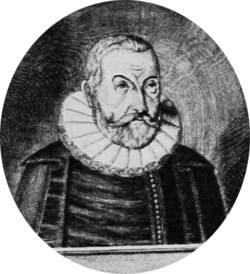
Johannes Eccard was a German composer born in Mühlhausen in what is now Thuringia , Germany. At the age of 18 he went to Munich as a pupil of Orlando Lasso and it is thought he travelled with Lasso to Paris. In 1574 he was back in Mühlhausen and stayed there for 4 years. With Joachim a Burck he edited a collection of sacred songs, Crepundia sacra Helmboldi (1577). In 1583 he was appointed assisstant conductor and in 1599 conductor at Konigsberg. In 1608 he was called to Berlin as principal conductor, a post he only held or 3 years due to his death.
Eccard's works are mostly choral compositions for 4 to 9 voices, sacred chorales and cantatas. He is much admired by musicians for the polyphonic structure of his work.
 |
| Eccard from Wikipedia |
Sunday, 26 January 2020
Sunday 26th January 2020 Epiphany 3
The Irish Blessing. Bob Chilcott Words traditional
This is a traditional Irish blessing put to music by Bob Chilcott
May the road rise to meet you.
May the wind be ever at your back.
May the sun shine warm upon your face;
the rains fall soft upon your fields
and until we meet again,
may God hold you in the palm of His hand.
As a composer, conductor, and singer, Bob Chilcott has enjoyed a lifelong association with choral music, first as a chorister and choral scholar in the choir of King's College, Cambridge, and for 12 years as a member of the King's Singers. He became a full-time composer in 1997, embracing his career with energy and commitment, and producing a large catalogue of music for all types of choirs which is published by Oxford University Press.
Music for Christmas forms a considerable part of his most popular repertoire, and works for the season include Wenceslas, My Perfect Stranger, and On Christmas Night. In his carols he sets both new and traditional texts, and writes for mixed-voice and upper-voice choirs.
He has written substantial sacred works including the St John Passion for Wells Cathedral Choir and the Salisbury Vespers. A Little Jazz Mass and the Requiem are amongst a number of works which continue to be performed worldwide. Other works include The Angry Planet, composed for the 2012 BBC Proms, and The Voyage for Age UK Oxfordshire, which in 2017 was nominated for a Royal Philharmonic Society Award. He has written many pieces for children, including his much-loved song, Can you hear me?, and a significant amount of music for the church. In 2013 he wrote The King shall rejoice for the service in Westminster Abbey to celebrate the 60th anniversary of the coronation of Her Majesty, Queen Elizabeth II.
Bob has conducted choirs in more than 30 countries worldwide and has worked with many thousands of amateur singers across the UK in a continuing series of Singing Days. For seven years he was conductor of the Chorus of The Royal College of Music in London and since 2002 he has been Principal Guest Conductor of the BBC Singers.
His music has been widely recorded by leading British choirs and groups including King's College, Cambridge, Wells Cathedral, Westminster Abbey, The King's Singers, The Sixteen, Tenebrae, The BBC Singers, The Bach Choir, Commotio, and Ora. In 2016 Bob enjoyed a collaboration with the celebrated singer Katie Melua and the Gori Women's Choir on the album In Winter, which reached the top 10 in the album charts in the UK and Germany. His first Christmas disc, The Rose in the Middle of Winter, was recorded by Commotio. In 2017 two new discs were released by Commotio and Choralis – All Good Things on Naxos, and In Winter's Arms on Signum, his first recording collaboration with an American choir. Newer recording projects are with Gloucester Cathedral Choir, Houston Chamber Choir, and Wroclaw Philharmonic Choir.
In 2017 Bob was awarded an Honorary Fellowship of The Royal School of Church Music.
Taken from bobchilcott.com
This is a traditional Irish blessing put to music by Bob Chilcott
May the road rise to meet you.
May the wind be ever at your back.
May the sun shine warm upon your face;
the rains fall soft upon your fields
and until we meet again,
may God hold you in the palm of His hand.
As a composer, conductor, and singer, Bob Chilcott has enjoyed a lifelong association with choral music, first as a chorister and choral scholar in the choir of King's College, Cambridge, and for 12 years as a member of the King's Singers. He became a full-time composer in 1997, embracing his career with energy and commitment, and producing a large catalogue of music for all types of choirs which is published by Oxford University Press.
Music for Christmas forms a considerable part of his most popular repertoire, and works for the season include Wenceslas, My Perfect Stranger, and On Christmas Night. In his carols he sets both new and traditional texts, and writes for mixed-voice and upper-voice choirs.
He has written substantial sacred works including the St John Passion for Wells Cathedral Choir and the Salisbury Vespers. A Little Jazz Mass and the Requiem are amongst a number of works which continue to be performed worldwide. Other works include The Angry Planet, composed for the 2012 BBC Proms, and The Voyage for Age UK Oxfordshire, which in 2017 was nominated for a Royal Philharmonic Society Award. He has written many pieces for children, including his much-loved song, Can you hear me?, and a significant amount of music for the church. In 2013 he wrote The King shall rejoice for the service in Westminster Abbey to celebrate the 60th anniversary of the coronation of Her Majesty, Queen Elizabeth II.
Bob has conducted choirs in more than 30 countries worldwide and has worked with many thousands of amateur singers across the UK in a continuing series of Singing Days. For seven years he was conductor of the Chorus of The Royal College of Music in London and since 2002 he has been Principal Guest Conductor of the BBC Singers.
His music has been widely recorded by leading British choirs and groups including King's College, Cambridge, Wells Cathedral, Westminster Abbey, The King's Singers, The Sixteen, Tenebrae, The BBC Singers, The Bach Choir, Commotio, and Ora. In 2016 Bob enjoyed a collaboration with the celebrated singer Katie Melua and the Gori Women's Choir on the album In Winter, which reached the top 10 in the album charts in the UK and Germany. His first Christmas disc, The Rose in the Middle of Winter, was recorded by Commotio. In 2017 two new discs were released by Commotio and Choralis – All Good Things on Naxos, and In Winter's Arms on Signum, his first recording collaboration with an American choir. Newer recording projects are with Gloucester Cathedral Choir, Houston Chamber Choir, and Wroclaw Philharmonic Choir.
In 2017 Bob was awarded an Honorary Fellowship of The Royal School of Church Music.
Taken from bobchilcott.com
 |
| Bob Chilcott from Wikipedia |
Sunday, 19 January 2020
Sunday 19th January 2020 Epiphany 2
Te Deum Laudamus in B flat C V Stanford
The "Te Deum" is from Morning, Evening and Communion Service in B flat Major first performed in Trinity College Chapel,Cambridge on 25th May 1879.
Sir Charles Villiers Stanford (1852-1924) thought to be one of our great British composers was actually Irish, born in Dublin, although educated at The University of Cambridge and then studied music in Leipzig and Berlin.
Whilst an undergraduate, he was appointed organist of Trinity College, Cambridge and was one of the founding professors of the Royal College of Music, where he taught composition for the rest of his life. He was also Professor of Music at Cambridge. His pupils included Gustav Holst and Ralph Vaughan Williams whose fame went on to surpass his own.
He is best remembered for his sacred choral compositions for church performance in the Anglican tradition. Along with Hubert Parry and Alexander Mackenzie, he was thought responsible for the renaissance of music in the British Isles.
The "Te Deum" is from Morning, Evening and Communion Service in B flat Major first performed in Trinity College Chapel,Cambridge on 25th May 1879.
Sir Charles Villiers Stanford (1852-1924) thought to be one of our great British composers was actually Irish, born in Dublin, although educated at The University of Cambridge and then studied music in Leipzig and Berlin.
Whilst an undergraduate, he was appointed organist of Trinity College, Cambridge and was one of the founding professors of the Royal College of Music, where he taught composition for the rest of his life. He was also Professor of Music at Cambridge. His pupils included Gustav Holst and Ralph Vaughan Williams whose fame went on to surpass his own.
He is best remembered for his sacred choral compositions for church performance in the Anglican tradition. Along with Hubert Parry and Alexander Mackenzie, he was thought responsible for the renaissance of music in the British Isles.
 |
| Stanford from Wikipedia |
The Lamb Music John Tavener (1944 - 2013), Words William Blake (1757-1827)
Tavener was born in Wembley, London. He was a music scholar at Highgate School, where a fellow scholar was John Rutter. The school choir was often used by the BBC when they needed a boys' choir. He began to compose whilst at school and was also a pianist good enough to perform with the National Youth Orchestra. In 1961 he was organist and choirmaster at St John's Presbyterian church, Kensington, a post he held for 13 years. He went to the Royal Academy of Music in 1962 where he decided to concentrate on composition and gave up the piano.
Blake was often considered "mad" by his contemporaries for his idiosyncratic views. The singularity of his work makes him difficult to classify.
 |
| John Tavener from Wikipedia |
He came to prominence with his Cantata "The Whale" in 1968. In 1971 he began teaching at Trinity College of Music in London. In 1977 he converted to Russian Orthodox Church. Orthodox liturgy became a major influence on his composition.
"The Lamb" written in 1982 for his nephew's third birthday has become a choral classic. It was composed in a single afternoon for unaccompanied SATB choir, using William Blake's poem.
He was knighted in 2000 for his services to music. John Rutter describes Tavener as having the "very rare gift" of being able to "bring an audience to a deep silence."
William Blake was largely unrecognised during his life, he is now considered to be one of the seminal figures of poetry and art in the Romantic age. He was born in Soho and although his family were English Dissenters, he was baptised. The Bible was a profound influence on his work. In 1772 Blake was apprenticed to James Basire, an engraver, for 7 years. At the end of his term aged 21, he became a profession engraver. He had been taught an outmoded style and it is thought that this tuition held him back from greatness during his lifetime.
In 1779, Blake began as a student at the Royal Academy where he was somewhat rebellious against Joshua Reynolds.
In 1800, Blake moved to Felpham, illustrating poetry by William Hayley. He was unhappy in his work and returned to London after 3 years.
 |
| William Blake Wikipedia |
"The Lamb" is from a collection of poems "Songs of Innocence". It was always intended to be sung, but Blake's melody is lost. It was set to music by Vaughn Williams in his song cycle "Ten Blake Songs" and later by Sir John Tavener.
Sunday 12th January 2020 Epiphany 1
Ave Verum Corpus W A Mozart
Ave Verum Corpus (Hail, true body) is a setting of the Latin Hymn, in D major. It was written for Anton Stoll, a friend and church musician of St Stephen, Baden.
It was composed in 1791 whilst visiting his wife Constanze who was pregnant with their 6th child and staying at the spa Baden bei Wien. It was composed for the feast of Corpus Christi. Mozart's manuscript has only "Sotto voce" marked at the beginning with no other markings.
Wolfgang Amadeus Mozart (1756 - 1791)
Mozart was a child prodigy competent on keyboard and violin. He began composing at the age of five. He performed around Europe for royalty. At the age of 17 he was engaged as a musician at the Salzburg court but was restless and travelled looking for a better position. Whilst visiting Vienna he was dismissed from his position in Salzburg. He remained in Vienna, where he gained fame but no financial security.
He composed more than 600 works, many acknowledged as the finest in symphonies, concertante, operatic, chamber and choral music. He remains one of the best loved classical composers, whose work influenced many composers. Joseph Haydn said of Mozart "Posterity will not see such a talent again in 100 years."
Ave Verum Corpus (Hail, true body) is a setting of the Latin Hymn, in D major. It was written for Anton Stoll, a friend and church musician of St Stephen, Baden.
It was composed in 1791 whilst visiting his wife Constanze who was pregnant with their 6th child and staying at the spa Baden bei Wien. It was composed for the feast of Corpus Christi. Mozart's manuscript has only "Sotto voce" marked at the beginning with no other markings.
Wolfgang Amadeus Mozart (1756 - 1791)
Mozart was a child prodigy competent on keyboard and violin. He began composing at the age of five. He performed around Europe for royalty. At the age of 17 he was engaged as a musician at the Salzburg court but was restless and travelled looking for a better position. Whilst visiting Vienna he was dismissed from his position in Salzburg. He remained in Vienna, where he gained fame but no financial security.
He composed more than 600 works, many acknowledged as the finest in symphonies, concertante, operatic, chamber and choral music. He remains one of the best loved classical composers, whose work influenced many composers. Joseph Haydn said of Mozart "Posterity will not see such a talent again in 100 years."
 |
| W A Mozart from Wikipedia |
Sunday, 22 December 2019
Sunday 22nd December 2019 Service of 9 Lessons and Carols
Adam Lay YBounden 15th Century Boris Ord
Boris Ord (1897 - 1961) was born Bernhard Ord. He was a British organist and choirmaster of Kings College, Cambridge (1929 - 1957) He served in the RAF during World War 2. His arrangement of Adam Lay Ybounden is his only published work.
Nativity Carol John Rutter
John Rutter was born in London in 1945 and had his first musical training at Highgate School as a chorister. He studied music at Clare College, Cambridge where he wrote his first published music and had his first recording whilst still an undergraduate.
His compositions cover a wide variety of musical genres but he is well know by all choirs who must have some Rutter in their repertoire. He formed the Cambridge Singers and spends his time composing and conducting.
He was awarded a CBE for services to music in the 2007 Queen's New Year Honours List.
A Maiden Most Gentle Words Andrew Carter French Traditional Melody arranged by Andrew Carter
The Little Road To Bethlehem Michael Head
The Little Road To Bethlehem is one of Head's most popular songs. The words are by Margaret Rose. This evening it was sung by two of our junior choristers, Emily and James helped by Sarah Amos from the sopranos.
From Wikipedia
Michael Dewar Head was born in Eastbourne, United Kingdom on 28 January 1900. His father was a barrister and journalist and his mother an accomplished amateur singer and pianist. His mother's influence evidently dominated, and at age 10 he commenced his musical training, taking lessons in piano with Jean Adair and in singing with Fritz Marston at the Adair-Marston School of Music. He was educated at Monkton Combe School in Somerset.
He began to study at the Royal Academy of Music but was soon called up for service in the War. While working at an ammunition factory, he composed the song cycle Over the rim of the moon (Head et al., 1920).This was to become his first published work.
After the war, Head resumed his studies at the Academy. He studied composition with Frederick Corder, piano with T B Knott and organ with Reginald Steggall. He won the Sir Michael Costa scholarship for composition. He also won other awards for composition, sight singing and harmony. In 1924 Michael Head was made an Associate of the Royal Academy of Music. Two years later, he took up a post at Bedales School, Petersfield, where he taught for three years.
Head gave his first public recital as a self accompanied singer at Wigmore Hall in 1929. After this debut performance, his fame grew rapidly. He gave several more recitals in the British Isles and in many parts of the world. Additionally he gave several radio recitals, both in Britain and Canada. He took up the post of Pianoforte Professor at the Royal Academy in 1927 after an invitation by Sir John McEwen. This post he was to hold until his retirement in 1975.
Head was appointed an examiner for the Associated Board of the Royal Schools of Music and as such toured many countries, including Barbados, where he first met and became friends with Organist Dr. John George Fletcher in April 1969, South Africa and Zimbabwe (then Rhodesia). At the outbreak of World War II, he returned to London and continued teaching throughout the blitz. During this time, he gave hundreds of concerts in factories and in small towns.
Head died in Cape Town on 24 August 1976, from a sudden and unexpected illness, while examining for the Associated Board in Rhodesia and South Africa.
Harold Darke (1888 - 1976) was an English composer and organist. He is particularly known for his choral compositions which make up an established part of the Anglican repertoire.
Boris Ord (1897 - 1961) was born Bernhard Ord. He was a British organist and choirmaster of Kings College, Cambridge (1929 - 1957) He served in the RAF during World War 2. His arrangement of Adam Lay Ybounden is his only published work.
 |
| Boris Ord, photographed by Antony Barrington Brown from Wikipedia |
Nativity Carol John Rutter
John Rutter was born in London in 1945 and had his first musical training at Highgate School as a chorister. He studied music at Clare College, Cambridge where he wrote his first published music and had his first recording whilst still an undergraduate.
His compositions cover a wide variety of musical genres but he is well know by all choirs who must have some Rutter in their repertoire. He formed the Cambridge Singers and spends his time composing and conducting.
 |
| John Rutter from Wikipedia |
A Maiden Most Gentle Words Andrew Carter French Traditional Melody arranged by Andrew Carter
Taken from Andrew Carter's Website:
Andrew Carter's music is performed worldwide. As composer, guest conductor and workshop leader he has travelled extensively in the United States, Antipodes and Europe. A twenty-five year association with Oxford University Press has established his reputation as a writer of both choral miniatures and larger scale concert works for chorus and orchestra. Of these latter the widely performed Benedicite was followed by Te Deum, Musick's Jubilee, Horizons, Song of Stillness, and Laudate Dominum. Of similar scale, the Magnificat (MorningStar 2004), is already proving popular. In a lighter vein, the Three Nonsensical Songs for upper voices and orchestra were premiered by Quad Cities Symphony in 2005. After conducting his Magnificat in North Carolina in April 2008, Andrew gave workshops in Toronto and attended the celebrated St Olaf’s College in Minnesota as composer-in-residence.
A particular honour in the field of church music was the invitation to write Missa Sancti Pauli for the 1997 tercentenary celebrations of Wren's St Paul's Cathedral. Over the years several of Andrew’s carols have been included in the renowned Christmas Eve broadcast from King's College Chapel, Cambridge, with Mary's Magnificat featuring again in 2009. Andrew Carter’s Christmas Carols, conducted by the composer with John Scott at the organ, was named amongst the ‘ten best ever’ Christmas CDs in the BBC Music Magazine (Nov, 2007).
Andrew’s lifelong love of the organ is reflected in the festive Organ Concerto (MorningStar 2008) and an album of organ pieces (Oxford) which includes the much acclaimed Toccata on Veni Emmanuel. More recently, the substantial 22-variation Passacaglia (Banks 2007), written to honour Francis Jackson’s 90th birthday, was premiered by John Scott Whiteley in York Minster.
Born in Leicester in the English Midlands, Andrew Carter studied music at Leeds University before settling in York. During his time as a bass songman at York Minster, he founded the Chapter House Choir, the award winning mixed-voice concert group which he conducted for seventeen years, and for whom he penned many of his early published arrangements.
The Little Road To Bethlehem Michael Head
The Little Road To Bethlehem is one of Head's most popular songs. The words are by Margaret Rose. This evening it was sung by two of our junior choristers, Emily and James helped by Sarah Amos from the sopranos.
From Wikipedia
Michael Dewar Head was born in Eastbourne, United Kingdom on 28 January 1900. His father was a barrister and journalist and his mother an accomplished amateur singer and pianist. His mother's influence evidently dominated, and at age 10 he commenced his musical training, taking lessons in piano with Jean Adair and in singing with Fritz Marston at the Adair-Marston School of Music. He was educated at Monkton Combe School in Somerset.
He began to study at the Royal Academy of Music but was soon called up for service in the War. While working at an ammunition factory, he composed the song cycle Over the rim of the moon (Head et al., 1920).This was to become his first published work.
After the war, Head resumed his studies at the Academy. He studied composition with Frederick Corder, piano with T B Knott and organ with Reginald Steggall. He won the Sir Michael Costa scholarship for composition. He also won other awards for composition, sight singing and harmony. In 1924 Michael Head was made an Associate of the Royal Academy of Music. Two years later, he took up a post at Bedales School, Petersfield, where he taught for three years.
Head gave his first public recital as a self accompanied singer at Wigmore Hall in 1929. After this debut performance, his fame grew rapidly. He gave several more recitals in the British Isles and in many parts of the world. Additionally he gave several radio recitals, both in Britain and Canada. He took up the post of Pianoforte Professor at the Royal Academy in 1927 after an invitation by Sir John McEwen. This post he was to hold until his retirement in 1975.
Head was appointed an examiner for the Associated Board of the Royal Schools of Music and as such toured many countries, including Barbados, where he first met and became friends with Organist Dr. John George Fletcher in April 1969, South Africa and Zimbabwe (then Rhodesia). At the outbreak of World War II, he returned to London and continued teaching throughout the blitz. During this time, he gave hundreds of concerts in factories and in small towns.
Head died in Cape Town on 24 August 1976, from a sudden and unexpected illness, while examining for the Associated Board in Rhodesia and South Africa.
| Michael Head |
Still, Still, Still trad. German translated Andrew Gant Music Andrew Gant
Andrew Gant is a British composer, singer, author and Liberal Democrat politician. He attended Radley College and then read Music and English at St John's college, Cambridge. He studied at the Royal Academy of Music and gained a PhD at Goldsmiths College, University of London.
In The Bleak Midwinter Words Christina Rossetti Music Harold Darke
This carol is based on a poem by Christina Rossetti, sister of Dante Gabriel Rossetti. The first setting was by Holst and appeared in The English Hymnal in 1906. Harold Darke's setting is more complex and first appeared in 1911.
 |
| Christina Rossetti by her brother from Wikipedia. |
 |
| Harold Darke from Wikipedia |
I Saw Three Ships English traditional carol arranged by David Willcocks
Taken from Wikipedia
"I Saw Three Ships (Come Sailing In)" is a traditional and popular Christmas carol from England. The earliest printed version of "I Saw Three Ships" is from the 17th century, possibly Derbyshire, and was also published by William Sandys in 1833.
The lyrics mention the ships sailing into Bethlehem, but the nearest body of water is the Dead Sea about 20 miles (32 km) away. The reference to three ships is thought to originate in the three ships that bore the purported relics of the Biblical magi to Cologne Cathedral in the 12th century.
Another possible reference is to Wenceslaus II, King of Bohemia, who bore a coat of arms "Azure three galleys argent". Another suggestion is that the ships are actually the camels used by the Magi, as camels are frequently referred to as "ships of the desert".
Sir David Valentine Willcocks, CBE, MC (30 December 1919 – 17 September 2015) was a British choral conductor, organist, composer and music administrator. He was particularly well known for his association with the Choir of King's College, Cambridge, which he directed from 1957 to 1974, making frequent broadcasts and recordings. Several of the descants and carol arrangements he wrote for the annual service of Nine Lessons and Carols were published in the series of books Carols for Choirs which he edited along with Reginald Jacques and John Rutter. He was also director of the Royal College of Music in London.
During the Second World War (1939–1945) he served as an officer in the British Army, and was decorated with the Military Cross for his actions on Hill 112 during the Battle of Normandy in July 1944. His elder son, Jonathan Willcocks, is also a composer.
Sunday 22nd December 2019 Advent 4
The Angel Gabriel from heaven came. Sabine Baring-Gould Basque traditional arr. Edgar Pettman.
This is a Basque Christmas folk carol based on the annunciation of the Virgin Mary by Archangel Gabriel. It was collected by Charles Bordes (1863 -1909) a french music teacher and composer and paraphrased into English by Sabine Baring-Gould (1834-1924) an Anglican priest and collector of folk songs. It is commonly sung to an arrangement by Edgar Pettman (1866-1943) English organist, choral conductor and music editor.
This is a Basque Christmas folk carol based on the annunciation of the Virgin Mary by Archangel Gabriel. It was collected by Charles Bordes (1863 -1909) a french music teacher and composer and paraphrased into English by Sabine Baring-Gould (1834-1924) an Anglican priest and collector of folk songs. It is commonly sung to an arrangement by Edgar Pettman (1866-1943) English organist, choral conductor and music editor.
Subscribe to:
Posts (Atom)