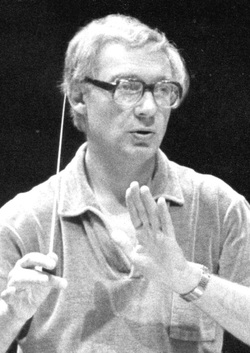
Welcome to the Saint Mary choir blog.

The church has both an adult and junior choir. We are affiliated to the Royal School of Church Music(RSCM). The junior choir are provided with tuition to enable them to gain their RSCM medals.

The senior choir is a SATB choir with its main responsibility to sing at the 10am Sunday service, including an anthem. See below for more details.

Our choirs do not require any fees to belong to them. New members to both the senior and junior choir are always welcome, whatever their standard. If you are interested in joining us please contact our Director of Music (Joanna) via the  Contact Us page.

Sunday, 12 December 2021

Sunday 12th December 2021 Advent 3

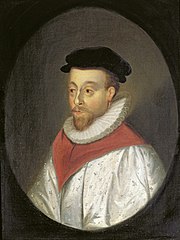
 "This is the record of John" Orlando Gibbons (1583-1625)

This is typical anthem of its time.  It is based on text from the Gospel of John (1:19 -23) and refers to John the Baptist.  It is divided into 3 sections each starting with solo countertenor followed by SATB chorus echoing the words of the soloist. Although usually performed on organ or viol, today Joanna Chivers (our Director of Music) played an electric piano on "harpsichord" mode which added an "early music" feel to the piece.

The anthem was written at the request of William Laud, president of St John's College, Oxford.

Gibbons sang in he choir of Kings College Cambridge between 1598 and 1598, where his eldest brother was master of the choristers. He gained his Bachelor of Music in 1606. King James 1 appointed him a Gentleman of the Chapel Royal, and he was organist there from around 1615 until his death, being senior organist from 1623. He was also a keyboard player in the privy chamber of Prince Charles (later Charles 1) and organist at Westminster Abbey. He died suddenly at the age of 41.

From Wikipedia
He wrote a large number of pieces for keyboard, madrigals and many verse anthems of which "This is the record of John" is one.


Sunday, 5 December 2021

Sunday 5th December 2021 Advent 2

 How Beautiful Upon the Mountains   from "Awake, awake; put on thy strength, O Zion"
John Stainer 1840-1901 Words Isaiah 52 v. 7

Stainer was born in Southwark, London, the son of a cabinet maker. He was a chorister at  St Paul's Cathedral at the age of 10 and at 16, appointed organist at St Michael's College, Tenbury.  In 1960, he became organist at Magdalen College, Oxford. He was allowed to study for a degree so long as it did not interfere with his duties and in 1864 gained his BA, and 2 years later his MA.  He was eventually an examiner for Oxford music degrees.

In 1872 he was appointed organist at St Paul's cathedral, in 1877 an honorary fellow of the Royal Academy of Music, and an examiner for the Doctor of Music degrees for Cambridge and London Universities.  He received his knighthood from Queen Victoria in 1888.


John Stainer (Wikimedia Commons)

Sunday, 28 November 2021

Sunday 28th November 2021 first Sunday in Advent

 In Night's Dim Shadows Lying Advent Carol arranged by George Guest (1924 - 2002)

This is an English translation of In Noctis Umbra Desides by C Coffin (1676-1749) translated by W J Blew.

1. In night’s dim shadows lying,
Our limbs fast lock’d in sleep,
To thee, with faithful sighing,
Our souls their vigil keep.

2. Desire of every nation,
Hear, Lord, our piteous cry;
Thou Word, the world’s salvation,
Uplift us where we lie.

3. Lord, be thine Advent hasten’d,
Lest sin thy people mar;
The gates which Adam fasten’d—
The gates of heav’n, unbar.

4. Son, to thine endless merit,
Redeemer, Saviour, Friend,
With Sire and Holy Spirit
Be praises without end. 

George Guest was born in Bangor, North Wales and was a chorister at Bangor and chester cathedrals, later becoming sub organist at Chester. He served with the RAF in WWII and after that was organ scholar at St John's College Cambridge in 1947, becoming University organist and choirmaster in 1951 which he held until 1991.

From 1956-1982 he was lecturer in music at Cambridge University and has been President of the Royal College of Organists and the Association of Cathedral Organists. he has also directed the Berkshire Boys Choir, Tanglewood, Massachusetts in 1967 and 1970.

Dr Guest conducted St John's College Choir around the world and under his direction the choir has made a multitude of recordings.

Sunday, 21 November 2021

Sunday 21st November 2021 Evensong at the church of St Mary The Virgin, Barnham

Mrs Chivers and the choir were invited to sing Evensong at Barnham.


The Magnificat and Nunc Dimitis in B flat  C V Stanford

Taken from Wikipedia.
The Magnificat (Latin for "[My soul] magnifies [the Lord]") is a canticle, also known as the Song of Mary, the Canticle of Mary and, in the Byzantine tradition, the Ode of the Theotokos . It is traditionally incorporated into the liturgical services of the Catholic Church (at vespers) and of the Eastern Orthodox churches (at the morning services). It is one of the eight most ancient Christian hymns and perhaps the earliest Marian hymn. Its name comes from the incipit of the Latin version of the canticle's text.

The text of the canticle is taken directly from the Gospel of Luke (1:46–55) where it is spoken by Mary upon the occasion of her Visitation to her cousin Elizabeth. In the narrative, after Mary greets Elizabeth, who is pregnant with John the Baptist, the latter moves within Elizabeth's womb. Elizabeth praises Mary for her faith (using words partially reflected in the Hail Mary), and Mary responds with what is now known as the Magnificat.

Within the whole of Christianity, the Magnificat is most frequently recited within the Liturgy of the Hours. In Western Christianity, the Magnificat is most often sung or recited during the main evening prayer service: Vespers in the Catholic and Lutheran churches, and Evening Prayer (or Evensong) in Anglicanism. In Eastern Christianity, the Magnificat is usually sung at Sunday Matins. Among Protestant groups, the Magnificat may also be sung during worship services, especially in the Advent season during which these verses are traditionally read.

The Nunc dimittis, also known as the Song of Simeon or the Canticle of Simeon, is a canticle taken from the second chapter of the Gospel of Luke, verses 29 through 32. Its Latin name comes from its incipit, the opening words, of the Vulgate translation of the passage, meaning "Now let depart". Since the 4th century it has been used in services of evening worship such as Compline, Vespers, and Evensong.

The title is formed from the opening words in the Latin Vulgate, “Nunc dimittis servum tuum, Domine" ("Now thou dost dismiss thy servant, O Lord"). Although brief, the canticle abounds in Old Testament allusions. For example, "Because my eyes have seen thy salvation" alludes to Isaiah 52:10.

According to the narrative in Luke 2:25-32, Simeon was a devout Jew who had been promised by the Holy Spirit that he would not die until he had seen the Messiah. When Mary and Joseph brought the baby Jesus to the Temple in Jerusalem for the ceremony of redemption of the firstborn son (after the time of Mary's purification: at least 40 days after the birth, and thus distinct from the circumcision), Simeon was there, and he took Jesus into his arms and uttered words rendered variously as follows:

Charles Villiers Stanford
C V Stanford from Wikipedia


O Thou the Central Orb  Charles Wood

See Mattins earlier today.
Sunday 21st November 2021 3rd Sunday of Advent

 O Thou the Central Orb  Charles Wood

This is one of Wood's many fine anthems. It is suitable for Advent.

Charles Wood (1866-1926) was born in Ireland. He was a treble chorister in the nearby St Patrick’s Cathedral, Armagh. He received his early education in the cathedral choir school and also studied the organ under Robert Turle and Dr Thomas Marks. In 1883, he was one of the inaugural students of the Royal College of Music, studying composition under Charles Villiers Stanford and CHH Parry. After four years he continued his studies at Selwyn College, Cambridge. In 1889 he was appointed as organ scholar in Gonville and Caius college, Cambridge, becoming a fellow in 1994 and Director of Music and organist. Following the death of Stanford in 1924 Wood took over the role of Professor of Music in Cambridge.

He is remembered for his Anglican Church music.


Charles Wood from Wikipedia


Sunday, 14 November 2021

Sunday 14th November 2021 Second before Advent. Remembance Sunday

So They Gave Their Bodies  Peter Aston (1938- 2013)  From Pericles' Funeral Oration (Athens 431BC) translation Alfred Zimmern

Peter Aston was born in Birmingham.  He studied at The Birmingham School of Music and The University of York.  In 1964 he was a lecturer in music at The University York. Ten years layter he was appointed Professor of Music at The University of East Anglia and eventually Emeritus Professor of Composition.  He is best known for his liturgical works although also wrote chamber works for voice and instrument, choral and orchestral works and an opera for children. He was a lay canon in Norwich Cathedral and founded the Norwich Festival of Contemporary Church Music. He founded the Tudor Consort and English Baroque Ensembles.


Picture
Peter Aston from The Morley Consort of Voices
Pericles' Funeral Oration was written by Thucydides for his history of the Peloponnesian war. Pericles delivers the oration to not only bury the dead, but to praise democracy.

"So they gave their bodies to the commonwealth and received, each for his own memory, praise that will never die, and with it the grandest of all sepulchres, not that in which their mortal bones are laid, but a home in the minds of men, where their glory remains fresh to stir to speech or action as the occasion may require."


Pericles' Funeral Oration by Philipp Foltz


Sunday, 7 November 2021

Sunday 7th November 2021 Third before Advent

 "Lead me Lord" from "Praise the Lord, O my soul" by Samuel Sebastian Wesley


"Praise the Lord, O my Soul" was written in 1861 and contains the short anthem "Lead me Lord". It was composed when Wesley was organist at Winchester College and Cathedral. "Lead me Lord " is the final section of the work, and has a wondrous simplicity with 2 short solo parts which lend themselves beautifully for young choristers starting on solo work.

Samuel Sebastian Wesley (1810 - 1876) was the illegitimate son of Samuel Wesley and Sarah Souter, and grandchild of Charles Wesley. He was a choirboy in the Chapel Royal and then embarked on a musical career.  He was appointed organist at Hereford Cathedral in 1832 and then married the Dean's sister.  He moved to Exeter Cathedral in 1835 and 1842, Leeds Parish Church, 1849 - Winchester Cathedral, 1865 - Gloucester Cathedral.  In 1839 he achieved his Bachelor of Music and Doctorate of Music from Oxford.  He became Professor of Organ in the Royal Academy of Music in 1850.

His work was almost exclusively for the Anglican church.  With Father Willis he is jointly credited with the invention of the concave and radiating pedal board for organ which has now become the standard internationally.


Samuel Wesley from Wikipedia